

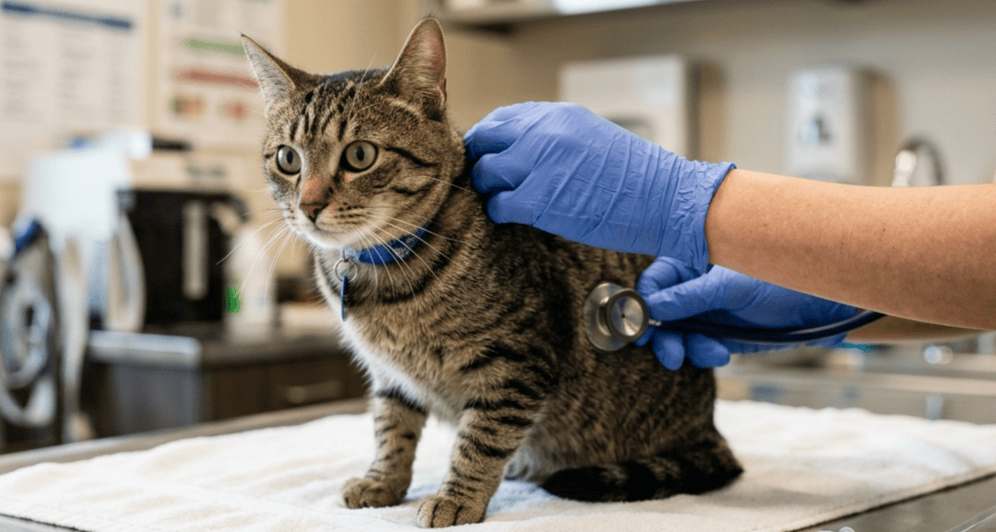
The Laboklin expert panel addresses a wide range of clinically relevant questions. On the topic of feline hyperthyroidism, four endocrinologists and one surgeon came together to share their expertise with us.
The following experts took part in the discussion: Prof. Dr. Felicitas Boretti, Dipl. ACVIM and ECVIM-CA, Head of Endocrinology, Clinic for Small Animal Medicine, Vetsuisse Faculty, University of Zurich; Dr. Katarina Hazuchova, PhD, Dipl. ECVIM CA, Senior Physician in Internal Medicine, Small Animal Clinic, Giessen; Prof. Dr. Mirja Nolff, Dipl. ECVS, Head of Soft Tissue and Oncological Surgery, Clinic for Small Animal Surgery, Vetsuisse Faculty, University of Zurich; PD Dr. Astrid Wehner, Dipl. ECVIM-CA, Senior Physician in Internal Medicine with a focus on Endocrinology, LMU Munich; PD Dr. Florian Zeugswetter, Head of the Endocrinology Department, University Clinic for Small Animals, Vienna.
Before moving on to diagnostics and therapy, we briefly review the development of feline hyperthyroidism: PD Dr. Zeugswetter explains that the normal feline thyroid gland contains a subpopulation of thyrocytes with a high growth potential. When these are stimulated by certain external factors, hyperplasia occurs. The hyperplastic cells eventually begin to proliferate autonomously, and adenomatous hyperplasia progresses to adenomas and, in rare cases, adenocarcinomas.
The exact triggers of adenomatous hyperplasia are not known. The sharp increase in cases since the disease was first described in 1977 suggests the involvement of environmental factors. Factors associated with the condition in numerous studies include indoor-only housing, canned food, fish-based diets, large fluctuations in dietary iodine, cat litter, and flavonoids (e.g. in soya). Polyphenols (BPA) and polybrominated diphenyl ethers (PBDEs) in food, drinking water, or the environment are also thought to play a role. PD Dr. Zeugswetter then reviews the most important clinical signs of feline hyperthyroidism.
The main symptoms he mentions are weight loss despite a good appetite, polyuria/polydipsia, scruffy coat, marked restlessness, and increased vocalisation. Gastrointestinal signs such as vomiting and diarrhoea are also common; sometimes diarrhoea may be the only symptom.
This immediately raises the question: which less typical signs should not be overlooked?
Dr. Katarina Hazuchova points out that cats with hyperthyroidism may show pronounced weakness with cervical ventroflexion. Hyperthyroidism should also be considered as a differential diagnosis in cases of polypnoea, as it may reflect increased oxygen demand. Likewise, thyroid function should always be checked in cats with newly developed heart murmurs or other signs of cardiac disease. The same applies to cats with epileptiform seizures or sudden blindness. PD Dr. Astrid Wehner emphasises that cardiac changes induced by hyperthyroidism are often not initially clinically relevant and may normalise again once the hyperthyroidism has been successfully treated. Cardiac biomarkers such as (NT-)proBNP or troponin I can be helpful for assessment. If these values do not decrease later on despite well- controlled hyperthyroidism, a cardiological examination should be carried out in order to further classify any underlying heart disease and treat it if necessary.
The laboratory changes that may indicate the presence of hyperthyroidism are discussed by Prof. Dr. Felicitas Boretti. She explains that in cats with elevated liver values and compatible clinical signs, hyperthyroidism should be included in the
differential diagnoses. Both ALP (alkaline phosphatase) and ALT may be increased; in practice, ALT is more frequently elevated, although it remains non-specific, whereas an increase in ALP is more typical in the context of hyperthyroidism. Elevated ALP and phosphate levels in combination with normal renal parameters can be explained by increased activity of bone-specific isoenzymes, reflecting increased bone turnover, and should prompt targeted thyroid diagnostics when clinical findings are compatible.
In most cases, the diagnosis is made based on an increased serum T4 concentration. PD Dr. Florian Zeugswetter addresses the question of how the cat’s age influences the reference interval. In kittens, T4 concentrations are physiologically very high and gradually decrease with age. For cats between approximately 1 and 9 years of age, standard reference ranges are generally appropriate.
In older cats, the reference intervals may, however, be set somewhat lower. Some laboratories have taken this into account by using a lower upper reference limit, as hyperthyroidism is primarily a disease of older cats. When interpreting T4 results, both the cat’s age and the upper reference limit of the respective laboratory should be considered.
This raises the question of how often cats with hyperthyroidism still show a T4 concentration within the reference range. Prof. Dr. Felicitas Boretti points out that this can occur, particularly in the early stages of the disease. If T4 is only mildly increased, natural fluctuations may temporarily bring it back into the reference range, although it is usually in the upper part of the range. Non-thyroidal illness can also lower T4 to the extent that it temporarily falls back within the reference interval.
In cases of unclear findings, PD Dr. Florian Zeugswetter recommends repeating the T4 measurement after 2–4 weeks. If there is a strong clinical suspicion of hyperthyroidism but T4 is within the upper reference range, measurement of free T4,
endogenous TSH, and reverse T3 can be helpful.
However, the limitations of these parameters must be considered: fT4 may be increased in non- thyroidal illness (NTI), making it relatively non-specific; a TSH concentration within or above the reference range makes hyperthyroidism highly unlikely, but a non-detectable TSH is also common in healthy cats; reverse T3, an inactive metabolite of T4, reliably increases in hyperthyroidism, although further studies are still needed. If these advanced parameters also fail to clarify the situation, the next step in the diagnostic work-up is the T3 suppression test, or preferably thyroid scintigraphy.
The question is raised as to when a thyroid carcinoma should be suspected instead of benign adenomatous hyperplasia or an adenoma. PD Dr. Astrid Wehner names rapidly growing, solid masses (if not cystic), as well as cats that are difficult to stabilise and require unusually high doses of antithyroid medication, as warning signs. Dr. Katarina Hazuchova adds that these are often patients that have been hyperthyroid for a longer period of time. PD Dr. Florian Zeugswetter also describes palpation findings as indicative: benign nodules tend to be soft and easily movable, whereas firm, poorly movable and larger changes are more suggestive of carcinoma. Scintigraphy is unfortunately less reliable for definitive differentiation than one might expect.
In terms of therapeutic options, the question of prognosis is raised. PD Dr. Astrid Wehner reports encouraging outcomes here. Overall, the prognosis is favourable, although it also depends on the cat’s age and, of course, any comorbidities. Curative treatment options such as radioiodine therapy are associated with significantly longer life expectancy, lower recurrence rates, and fewer treatment-related side effects. After radioiodine therapy, the median survival time is approximately 3.7 to 4.0 years. In comparison, the prognosis under medical treatment with antithyroid drugs is less favourable. In a study involving 47 cats treated long-term with thiamazole/methimazole, the median survival time was 2.0 years.
This difference can be explained by several factors. Owners may, over time, no longer be able to consistently administer medication to their cat, or the hyperthyroidism may no longer be adequately controlled medically. With prolonged treatment using antithyroid drugs, resistance may also develop. In addition, adenomatous changes may, over time, progress to carcinoma. Prof. Dr. Mirja Nolff lists the main indications for thyroidectomy as cats that are difficult to stabilise, in which medication administration is not feasible, those experiencing adverse effects from antithyroid drugs, cats with large nodules, or cases where carcinoma is suspected.
It becomes critical when bilateral surgery is required and the parathyroid glands cannot be preserved. Reimplantation is not reliably successful, so postoperative hypoparathyroidism must be anticipated. Postoperatively, ionised calcium should be monitored very closely. Another serious but rare complication is laryngeal paralysis. Prof. Dr. Nolff emphasises that, compared with radioiodine therapy, unilateral thyroidectomy performs less well in achieving euthyroidism. This is because both thyroid lobes are often affected. She therefore recommends informing cat owners that unilateral surgery may not fully resolve the clinical signs. In such cases, removal of the second thyroid lobe may still be necessary if radioiodine therapy is not available. Any resulting hypothyroidism is usually manageable.
The question of whether dietary therapy is an option is addressed by PD Dr. Astrid Wehner. A marked reduction in iodine intake can suppress thyroid hormone production sufficiently to achieve euthyroidism. A specific prescription diet is
available. Simply avoiding foods with high iodine content (fish, seafood) is not sufficient. The time required to achieve euthyroidism varies considerably (28 to 180 days). The diet must be strictly, completely, and permanently adhered to. Unfortunately, this is often the reason for long-term treatment failure. Overall, T4 concentrations may fluctuate and, in some cases, remain elevated. Antithyroid drugs remain the most commonly used treatment option. Approved veterinary products include carbimazole as a sustained-release formulation and thiamazole (methimazole). Sustained-release carbimazole can be given once daily according to the manufacturer, while thiamazole preparations are usually administered twice-daily.
Prof. Dr. Felicitas Boretti explains that a trial of once-daily dosing is generally possible. However, in cats with very high initial T4 levels, twice-daily administration usually leads to faster stabilisation. If T4 levels fall too low at a low total dose, switching to once-daily administration may be appropriate. Another option is a veterinary-licensed, individually dosed syrup formulation.
Regarding transdermal ointment treatment, PD Dr. Astrid Wehner and PD Dr. Florian Zeugswetter are rather cautious. This formulation has several disadvantages: the active substance, which is teratogenic to unborn children, may come into contact with the owner more easily; absorption is not always consistent; and residual cream in the ear may further affect uptake. In the future, a nanoparticle carrier ointment may become available in Germany, and studies on this are already underway.
PD Dr. Wehner also addresses hyperthyroidism and kidney function. In hyperthyroid cats, there is an increased circulating blood volume and consequently increased renal perfusion. This leads to glomerular hypertension, possibly accompanied by systemic hypertension, which can damage the kidneys and/or contribute to the progression of pre-existing renal disease, as proteinuria may also result. At the same time, glomerular filtration rate increases due to the higher intraglomerular pressure, resulting in lower blood concentrations of renal filtration markers such as creatinine and SDMA.
It is possible that a renal disease only becomes evident after normalisation of thyroid function. The experts agree that in cats that are already azotaemic at the time of diagnosis, treatment with antithyroid drugs should initially be started at a reduced dose. As a rule of thumb, this is about half of the standard dose, or slightly less depending on the severity of the azotaemia, in order to assess the kidneys’ response to therapy.
Radioiodine therapy (RIT) is considered the optimal treatment option. Dr. Katarina Hazuchova explains what needs to be considered when referring a patient. The cost of standard treatment is around €2000 net, and cats usually remain
hospitalised for 5–7 days. A cardiological assessment should be performed beforehand; in some centres, full diagnostic work-up including abdominal ultrasound is also required. Antithyroid medication should be discontinued 7 days before treatment, and an iodine-restricted diet 14 days prior. After RIT, cats must remain indoors for four weeks; if pregnant women, breastfeeding mothers, or babies/young children live in the household, they must not come into contact with the cat. Cats that may require intensive care or do not maintain adequate food intake are not suitable candidates for this treatment.
Regarding concurrent renal disease, Dr. Katarina Hazuchova and PD Dr. Florian Zeugswetter are in agreement: if euthyroidism has been achieved using antithyroid medication and there is no severe azotaemia at that point (creatinine within IRIS stage 2), the cat can be a good candidate for radioiodine therapy. It is very rare for azotaemia to worsen significantly after RIT. However, it is essential to ensure that hypothyroidism does not develop. If azotaemia or clinical signs of hypothyroidism occur alongside low T4 concentrations, levothyroxine supplementation should be initiated.
Monitoring: when should follow-up take place after starting therapy – and what should the final T4 target be? Dr. Katarina Hazuchova recommends the first recheck after 3–4 weeks in stable patients: full blood count, renal parameters, T4, and clinical assessment of symptoms. After another 3–4 weeks, another check is performed; once stabilised, monitoring every 3–4 months is usually sufficient.
Prof. Dr. Felicitas Boretti takes a different approach for cats that are already azotaemic at diagnosis, recommending earlier follow-up after 1–2 weeks. She also advises measuring TSH to avoid missing iatrogenic hypothyroidism (it should not rise above the reference interval). PD Dr. Florian Zeugswetter defines a different target range for T4 in azotaemic cats: in non-azotaemic cats, the goal is a T4 concentration in the middle of the reference range or slightly below. In azotaemic patients, however, T4 may remain in the upper reference range.
Prof. Dr. Boretti confirms that the timing of blood sampling in relation to tablet administration does not matter. Fluctuations in T4 concentrations during antithyroid therapy are well known, but they do not follow a circadian rhythm and are not related to the timing of medication. However, she emphasises that T4 should be measured in an external, quality- assured laboratory. In-house devices are less reliable and may deviate even within clinically relevant concentration ranges, which can lead to misinterpretation. The other experts strongly agree with this assessment.
Finally, the topic of side effects is briefly addressed. Dr. Katarina Hazuchova distinguishes between side effects that can often be “waited out” and those that require immediate action. The most common are gastrointestinal side effects – unpleasant for owners, but usually temporary. They should therefore be discussed proactively from the start. Mild increases in liver enzymes may also occur; these are rare and can normalise despite ongoing therapy. In contrast, severe pruritus and, in particular, blood dyscrasias such as haemolytic anaemia, neutropenia/leukopenia, or thrombocytopenia are critical – in these cases, antithyroid medication must be discontinued.
Such severe adverse effects, PD Dr. Astrid Wehner notes, most often occur within the first month and frequently within the first three months. The choice of oral formulation does not influence their frequency. Dermal preparations, however, may be associated with fewer gastrointestinal side effects.
Prof. Dr. Felicitas Boretti concludes on a reassuring note: even blood count abnormalities are usually reversible after discontinuation of antithyroid drugs. Modern, well-adjustable veterinary preparations allow for optimal control of T4 concentrations, meaning that severe side effects are now seen significantly less often.
Dr. Jennifer von Luckner